Early life
Messi was born on 24 June 1987 at the Hospital Italiano Garibaldi in Rosario, Santa Fe, to parents Jorge Horacio Messi (born 1958), a factory worker, and Celia María Cuccittini, a part-time cleaner.[14][15][16][17] His paternal family originates from the Italian city of Ancona, from which his ancestor, Angelo Messi, emigrated to Argentina in 1883.[18][19] He has two older brothers named Rodrigo and Matías as well as a sister named María Sol.[20] At the age of five, Messi started playing football for Grandoli, a local club coached by his father Jorge.[21] In 1995, Messi switched to Newell's Old Boys who were based in his home city Rosario.[21] At the age of 11, he was diagnosed with a growth hormone deficiency.[22] Primera División club River Plate showed interest in Messi's progress, but did not have enough money to pay for treatment for his condition as it cost $900 a month.[17] Carles Rexach, the sporting director of FC Barcelona, had been made aware of his talent as Messi had relatives in Lleida, Catalonia, and Messi and his father were able to arrange a trial.[17] Barcelona signed him after watching him play,[23] offering to pay for the medical bills if he was willing to move to Spain.[21] His family moved to Europe and he started in the club's youth teams.[23] He has two cousins also involved in football; Maxi and Emanuel Biancucchi.[24][25]
Club career
Barcelona
Messi made his official debut for the first-team on 16 November 2003 aged 16 years and 145 days, in a friendly match against Porto.[26][27] Less than a year later, Frank Rijkaard let him make his league debut against RCD Espanyol on 16 October 2004 (at 17 years and 114 days), becoming the third-youngest player ever to play for Barcelona and youngest club player who played in La Liga. This record broken by Barca team mate Bojan Krkić in September 2007. When he scored his first senior goal for the club against Albacete Balompié on 1 May 2005, Messi was 17 years, ten months and seven days old, becoming the youngest to ever score in a La Liga game for Barcelona[28] until it was again broken by Bojan Krkić in 2007, scoring from a Messi assist.[29] Messi said about his ex-coach Frank Rijkaard: "I'll never forget the fact that he launched my career, that he had confidence in me while I was only sixteen or seventeen."[30]
Career statistics


Club Season League Cup Supercup Champions League UEFA Super Cup Club World Cup Total
Apps Goals Assists Apps Goals Assists Apps Goals Assists Apps Goals Assists Apps Goals Assists Apps Goals Assists Apps Goals Assists
Barcelona 2004–05 7 1 0 1 0 0 — 1 0 0 — — 9 1 0
2005–06 17 6 3 2 1 0 0 0 0 6 1 1 — — 25 8 4
2006–07 26 14 2 2 2 1 2 0 0 5 1 0 1 0 0 0 0 0 36 17 3
2007–08 28 10 12 3 0 0 — 9 6 1 — — 40 16 13
2008–09 31 23 11 8 6 2 — 12 9 5 — — 51 38 18
2009–10 35 34 10 3 1 0 1 2 0 11 8 0 1 0 1 2 2 0 53 47 11
2010–11 24 27 16 6 7 3 2 3 0 7 6 2 — — 39 43 21
Career total 168 115 54 25 17 6 5 5 0 51 31 9 2 0 1 2 2 0 253 170 70
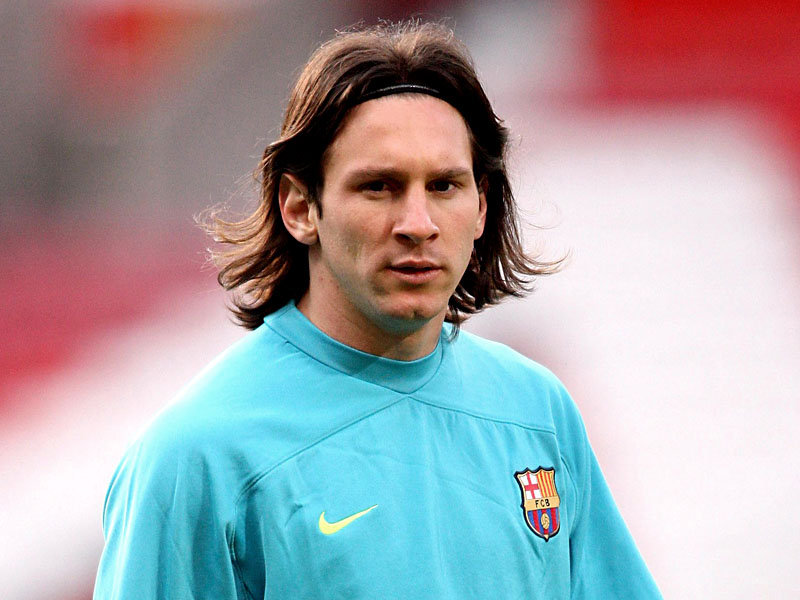
Lionel Andrés "Leo" Messi[3] (Spanish pronunciation: [ljoˈnel anˈdɾes ˈmesi]; born 24 June 1987) is an Argentine footballer who currently plays for FC Barcelona and the Argentina national team as a forward or winger. He also holds Spanish citizenship, which makes him eligible as a EU player. Considered one of the best football players of his generation[4][5][6] and frequently cited as the world's best contemporary player,[7] Messi received several Ballon d'Or and FIFA World Player of the Year nominations by the age of 21 and won both by the age of 22.[7][8][9][10] He also won the 2010 FIFA Ballon d'Or at the age of 23.[11] His playing style and ability have drawn comparisons to Diego Maradona, who himself declared Messi his "successor".[12][13]
Messi began playing football at a young age and his potential was quickly identified by Barcelona. He left Rosario-based Newell's Old Boys's youth team in 2000 and moved with his family to Europe, as Barcelona offered treatment for his growth hormone deficiency. Making his debut in the 2004–05 season, he broke his team record for the youngest footballer to score a league goal. Major honours soon followed as Barcelona won La Liga in Messi's debut season, and won a double of the league and Champions League in 2006. His breakthrough season was in the 2006–07 season; he became a first team regular, scoring a hat-trick in El Clásico and finishing with 14 goals in 26 league games. Messi then had the most successful season of his playing career, the 2008–09 season, in which he scored 38 goals to play an integral part in a treble-winning campaign. This record breaking season was then eclipsed in the following 2009–10 campaign, where Messi scored 47 goals in all competitions, equalling Ronaldo's record total for Barcelona.
Messi was the top scorer of the 2005 FIFA World Youth Championship with six goals, including two in the final game. Shortly thereafter, he became an established member of Argentina's senior international team. In 2006, he became the youngest Argentine to play in the FIFA World Cup and he won a runners-up medal at the Copa América tournament the following year. In 2008, in Beijing, he won his first international honour, an Olympic gold medal, with the Argentina Olympic football team.
Messi was born on 24 June 1987 at the Hospital Italiano Garibaldi in Rosario, Santa Fe, to parents Jorge Horacio Messi (born 1958), a factory worker, and Celia María Cuccittini, a part-time cleaner.[14][15][16][17] His paternal family originates from the Italian city of Ancona, from which his ancestor, Angelo Messi, emigrated to Argentina in 1883.[18][19] He has two older brothers named Rodrigo and Matías as well as a sister named María Sol.[20] At the age of five, Messi started playing football for Grandoli, a local club coached by his father Jorge.[21] In 1995, Messi switched to Newell's Old Boys who were based in his home city Rosario.[21] At the age of 11, he was diagnosed with a growth hormone deficiency.[22] Primera División club River Plate showed interest in Messi's progress, but did not have enough money to pay for treatment for his condition as it cost $900 a month.[17] Carles Rexach, the sporting director of FC Barcelona, had been made aware of his talent as Messi had relatives in Lleida, Catalonia, and Messi and his father were able to arrange a trial.[17] Barcelona signed him after watching him play,[23] offering to pay for the medical bills if he was willing to move to Spain.[21] His family moved to Europe and he started in the club's youth teams.[23] He has two cousins also involved in football; Maxi and Emanuel Biancucchi.[24][25]
Club career
Barcelona
Messi made his official debut for the first-team on 16 November 2003 aged 16 years and 145 days, in a friendly match against Porto.[26][27] Less than a year later, Frank Rijkaard let him make his league debut against RCD Espanyol on 16 October 2004 (at 17 years and 114 days), becoming the third-youngest player ever to play for Barcelona and youngest club player who played in La Liga. This record broken by Barca team mate Bojan Krkić in September 2007. When he scored his first senior goal for the club against Albacete Balompié on 1 May 2005, Messi was 17 years, ten months and seven days old, becoming the youngest to ever score in a La Liga game for Barcelona[28] until it was again broken by Bojan Krkić in 2007, scoring from a Messi assist.[29] Messi said about his ex-coach Frank Rijkaard: "I'll never forget the fact that he launched my career, that he had confidence in me while I was only sixteen or seventeen."[30]
Career statistics



Club Season League Cup Supercup Champions League UEFA Super Cup Club World Cup Total
Apps Goals Assists Apps Goals Assists Apps Goals Assists Apps Goals Assists Apps Goals Assists Apps Goals Assists Apps Goals Assists
Barcelona 2004–05 7 1 0 1 0 0 — 1 0 0 — — 9 1 0
2005–06 17 6 3 2 1 0 0 0 0 6 1 1 — — 25 8 4
2006–07 26 14 2 2 2 1 2 0 0 5 1 0 1 0 0 0 0 0 36 17 3
2007–08 28 10 12 3 0 0 — 9 6 1 — — 40 16 13
2008–09 31 23 11 8 6 2 — 12 9 5 — — 51 38 18
2009–10 35 34 10 3 1 0 1 2 0 11 8 0 1 0 1 2 2 0 53 47 11
2010–11 24 27 16 6 7 3 2 3 0 7 6 2 — — 39 43 21
Career total 168 115 54 25 17 6 5 5 0 51 31 9 2 0 1 2 2 0 253 170 70
Lionel Andrés "Leo" Messi[3] (Spanish pronunciation: [ljoˈnel anˈdɾes ˈmesi]; born 24 June 1987) is an Argentine footballer who currently plays for FC Barcelona and the Argentina national team as a forward or winger. He also holds Spanish citizenship, which makes him eligible as a EU player. Considered one of the best football players of his generation[4][5][6] and frequently cited as the world's best contemporary player,[7] Messi received several Ballon d'Or and FIFA World Player of the Year nominations by the age of 21 and won both by the age of 22.[7][8][9][10] He also won the 2010 FIFA Ballon d'Or at the age of 23.[11] His playing style and ability have drawn comparisons to Diego Maradona, who himself declared Messi his "successor".[12][13]
Messi began playing football at a young age and his potential was quickly identified by Barcelona. He left Rosario-based Newell's Old Boys's youth team in 2000 and moved with his family to Europe, as Barcelona offered treatment for his growth hormone deficiency. Making his debut in the 2004–05 season, he broke his team record for the youngest footballer to score a league goal. Major honours soon followed as Barcelona won La Liga in Messi's debut season, and won a double of the league and Champions League in 2006. His breakthrough season was in the 2006–07 season; he became a first team regular, scoring a hat-trick in El Clásico and finishing with 14 goals in 26 league games. Messi then had the most successful season of his playing career, the 2008–09 season, in which he scored 38 goals to play an integral part in a treble-winning campaign. This record breaking season was then eclipsed in the following 2009–10 campaign, where Messi scored 47 goals in all competitions, equalling Ronaldo's record total for Barcelona.
Messi was the top scorer of the 2005 FIFA World Youth Championship with six goals, including two in the final game. Shortly thereafter, he became an established member of Argentina's senior international team. In 2006, he became the youngest Argentine to play in the FIFA World Cup and he won a runners-up medal at the Copa América tournament the following year. In 2008, in Beijing, he won his first international honour, an Olympic gold medal, with the Argentina Olympic football team.

No comments:
Post a Comment